Import from any source
Bring in findings from your existing tools and processes via integrations, Open API, or direct import.


All your vulnerabilities in one workflow. Vulnerability Management makes it easy to process findings from all sources, including your Bug Bounty program, pentests, and internal tools.
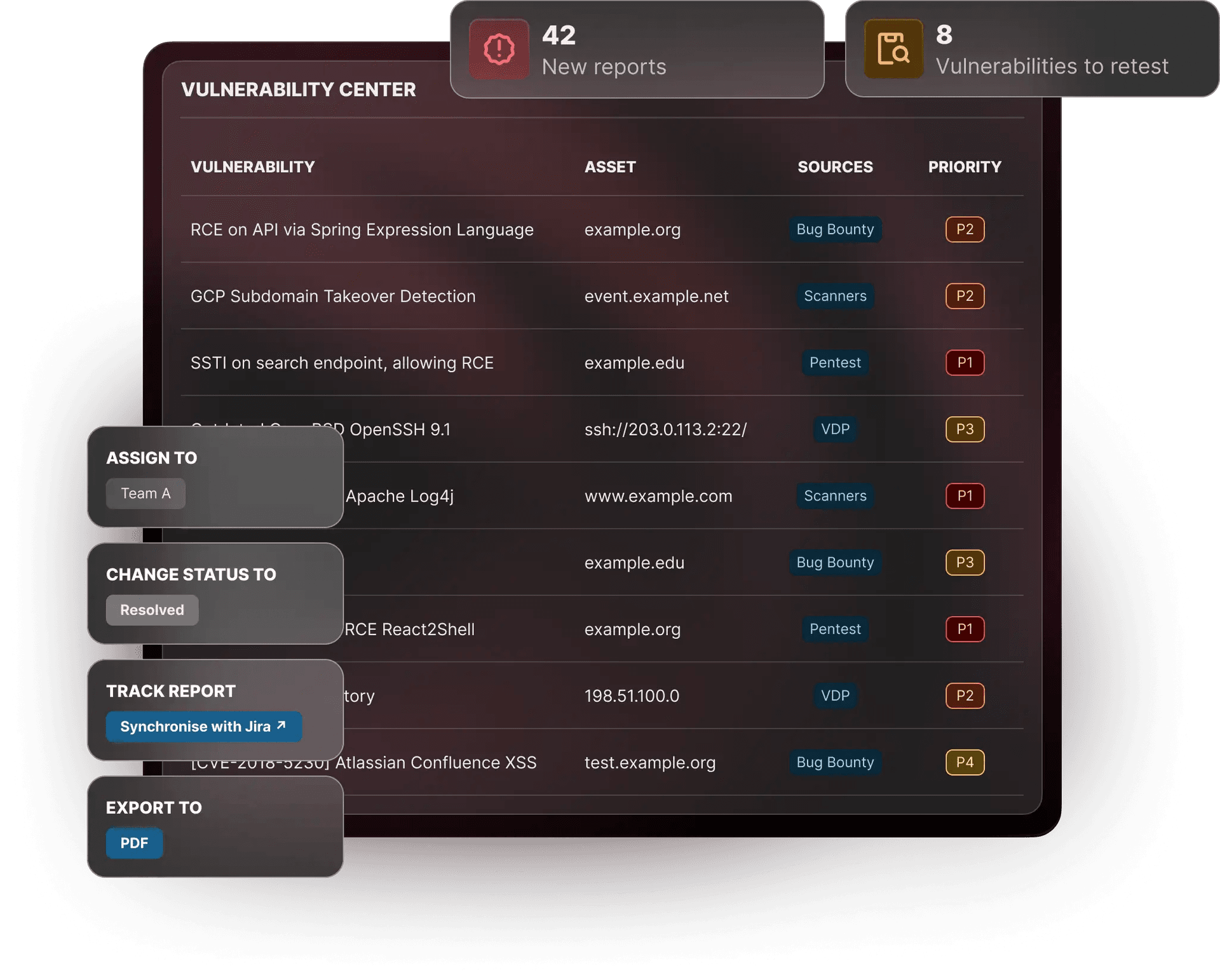
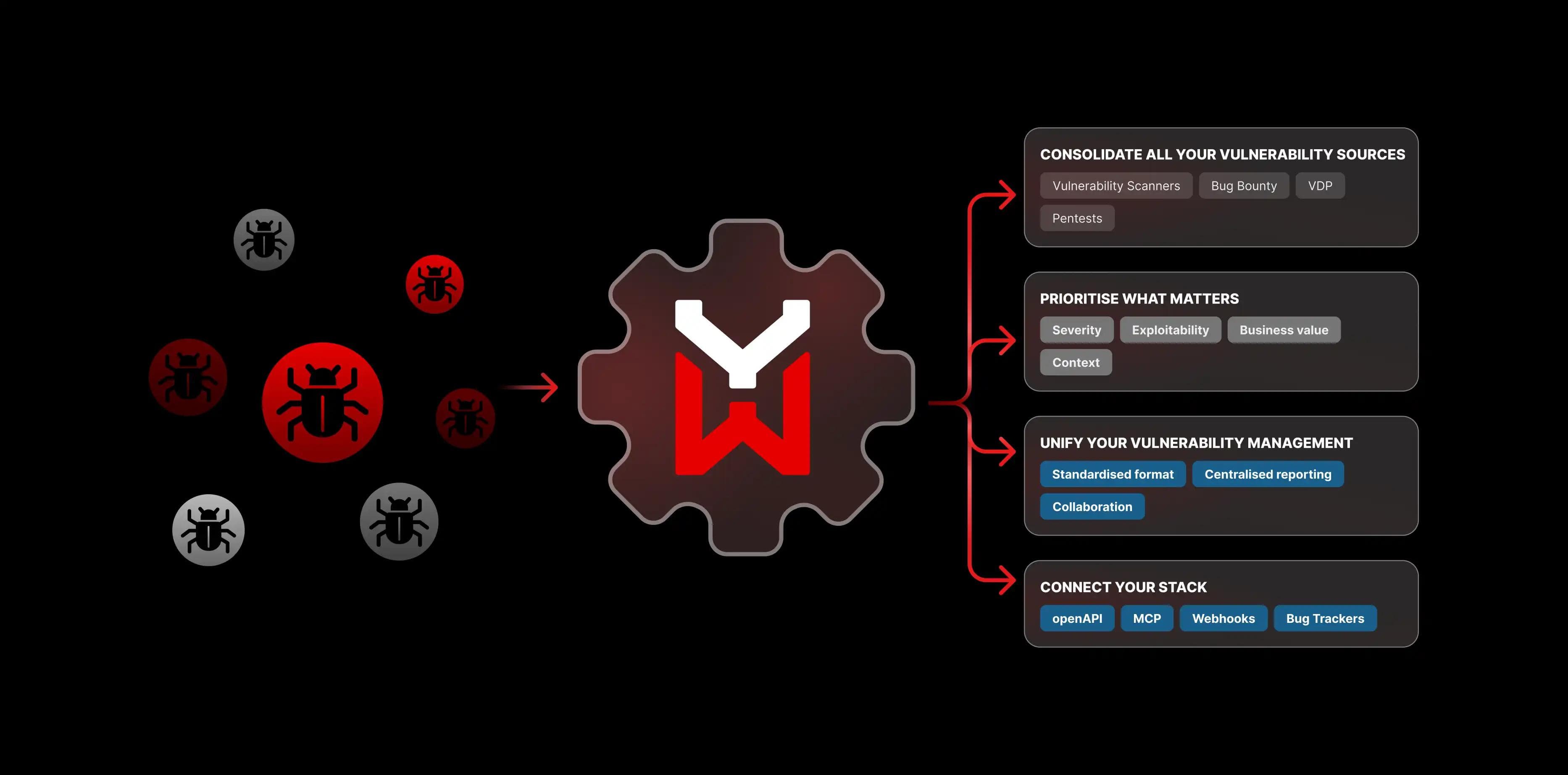
Vulnerabilities are reported through more channels than ever, from pentests and Bug Bounty to VDPs, third-party audits, and automated scanners. Without a single place to centralise and act on them, findings get lost, duplicated, or deprioritised.
Vulnerability Management gives your security team one unified workflow to ingest, triage, track, and remediate vulnerabilities regardless of their source.

Bring in findings from your existing tools and processes via integrations, Open API, or direct import.

Run campaigns directly on the platform via Pentest Management, receiving live vulnerability reports in a standardised format.

Publish a Vulnerability Disclosure Policy (VDP) to receive reports from the security community, including YesWeHack’s own researcher network via Featured VDP.







Whether a report comes from a pentest partner or a bug hunter, YesWeHack normalises it into a consistent format. So your team isn’t context-switching between PDF reports, spreadsheets, and ticketing systems.
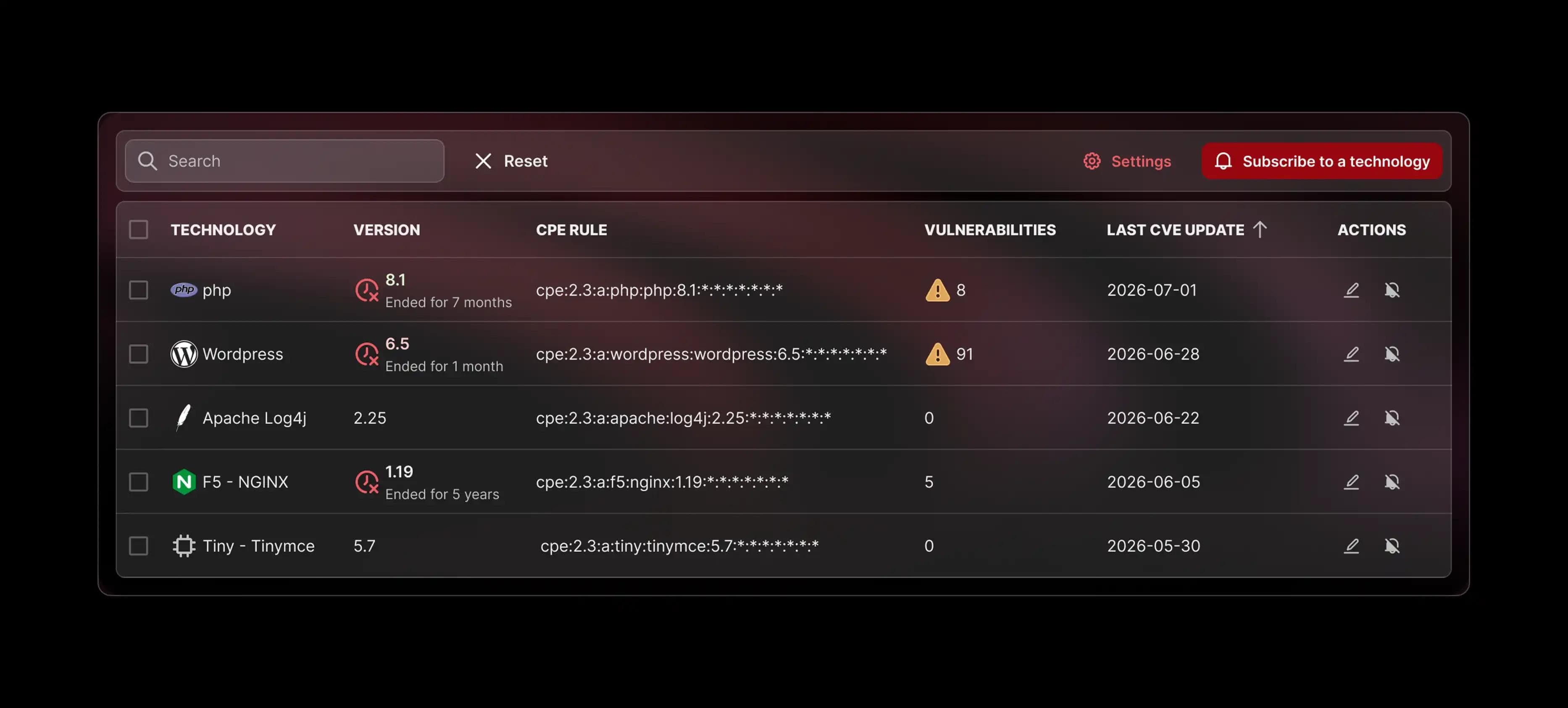
YesWeHack provides complete vulnerability intelligence for CVEs, giving you everything you need to understand and act on new issues, so you’re not left manually searching NVD and vendor advisories.
Easily sort by CVSS, EPSS, and KEV presence, and see instantly whether there is an available Checkpoint to check your exposure.

Identify whether your specific stack is impacted by a vulnerability, and whether it has been proven to be exploitable.

See how we detected the vulnerability, e.g., using Intrusion Detection System rules, and read vendor-published advisories and mitigations.

If a Checkpoint is available for the CVE, you can validate exposure and confirm remediation directly with Continuous Pentest.
Exposure happens when there’s a confirmed vulnerability and an affected asset.
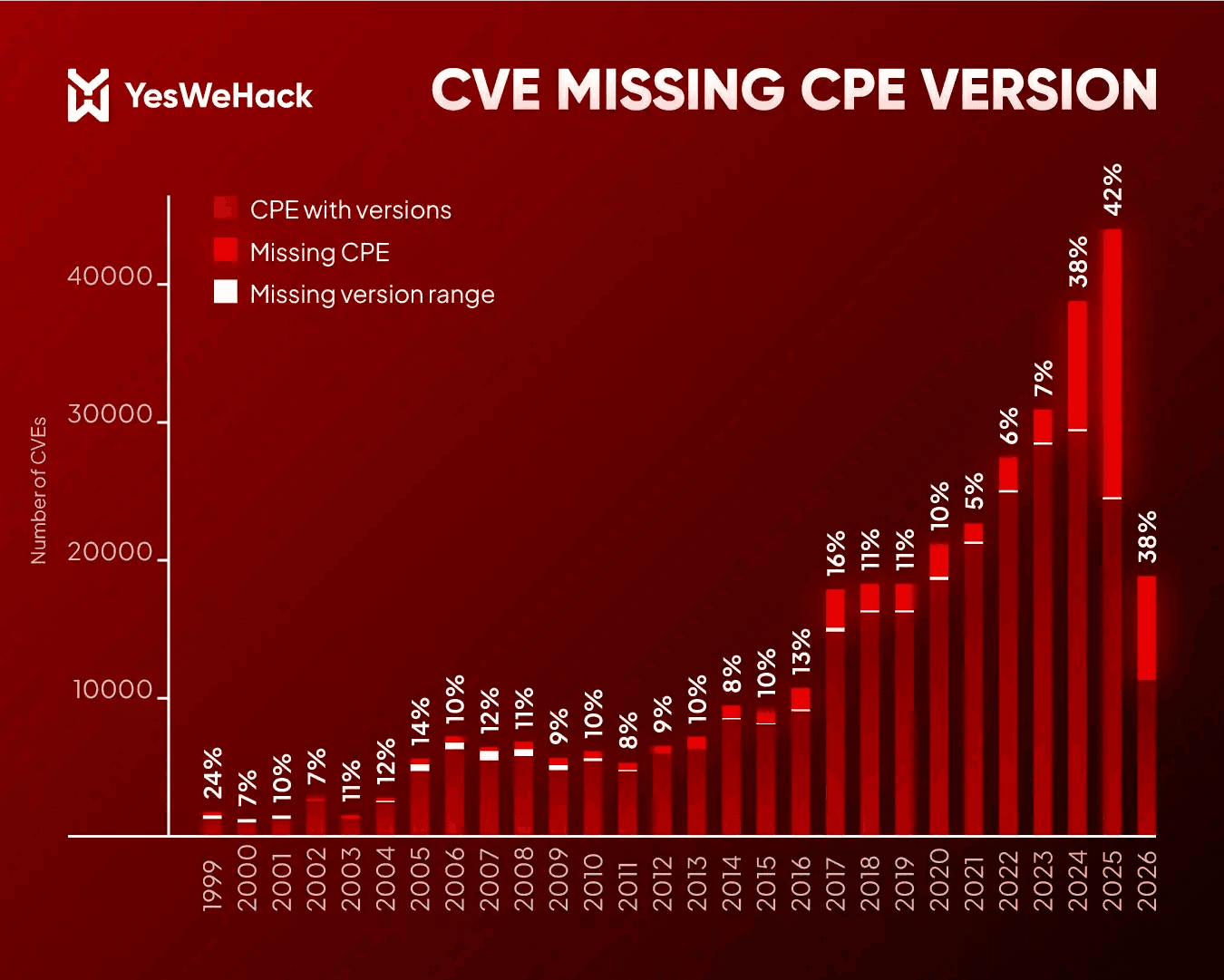
Unfortunately, more and more CVEs are published without Common Platform Enumeration (CPE) data. This chart, based on data from YesWeHack’s Vulnerability Intelligence Team, shows this issue has grown over time, but has become significantly worse in recent years as total CVE volume has exploded.
This lack of CPE data makes automated asset correlation very challenging.
Vulnpedia provides version-level CPE data that allows your team to quickly identify whether the organisation is exposed, enabling accurate prioritisation and prompt remediation of genuine exposures.

CVE Alerts is a continuous feed of vulnerability intelligence relevant to your specific environment.

YesWeHack's integration with Virtual Patching tools allows customers to use targeted WAF rules to block exploitation within hours of a new finding.
All actions are logged automatically for compliance and policy adherence.

A Vulnerability Disclosure Policy (VDP) is best practice, and it’s increasingly a requirement. Regulatory frameworks like NIS2 and some CISA directives effectively require a VDP. Others, including CRA, cite VDP as a best practice for coordinated vulnerability disclosure.
YesWeHack makes it straightforward to publish, manage, and act on VDP submissions. You can also publicise your program to the YesWeHack researcher community via Featured VDP.